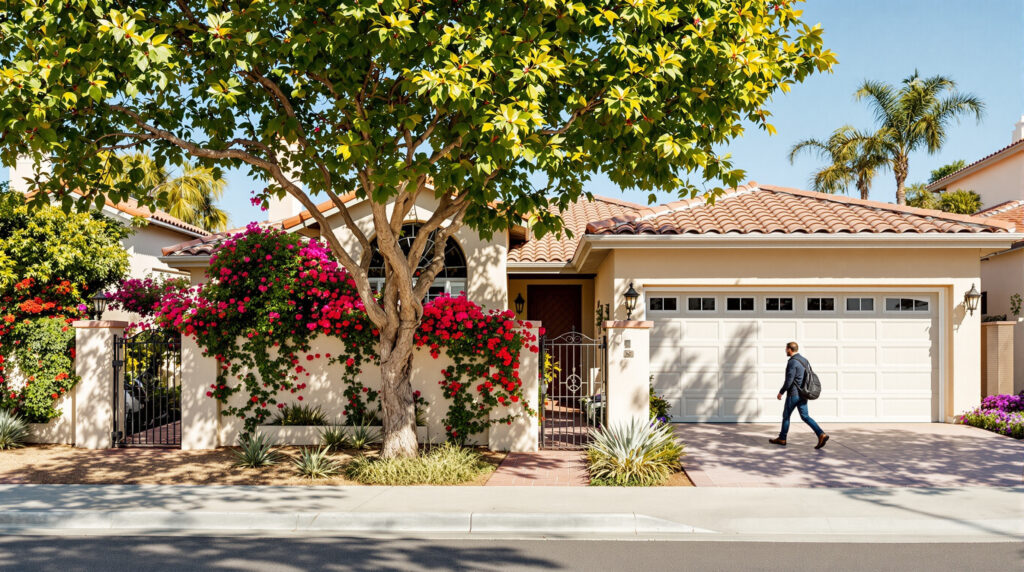
- San Diego median home price: $930,000–$960,000 across major zip codes (2026)
- Days on market: 15–28 days depending on neighborhood and price point
- Top buyer priorities: location (schools, commute), condition, and HOA transparency
- Financing: pre-approval saves 3–5 days; FHA and conventional loans most common
- Inspection critical: foundation, roof, HVAC, and mold screening essential in older neighborhoods
San Diego real estate tips for 2026 focus on understanding market cycles, selecting neighborhoods aligned with lifestyle and budget, and protecting your investment through rigorous due diligence. The San Diego market remains competitive but less frenzied than 2021–2026; homes now spend 15–28 days on market versus 5–10 days during peak years. Smart buyers and sellers use data, local expertise, and clear timelines to close faster and at fairer prices. This guide covers what successful San Diego transactions require in 2026.
Market Timing and Seasonal Trends for San Diego Real Estate Tips
San Diego’s real estate calendar runs year-round, but timing matters. Spring (March–May) brings peak inventory and competition. Buyers face more bidding wars; sellers attract larger pools but also higher buyer standards. Summer holds steady inventory but attracts relocators and out-of-state buyers, pushing prices slightly higher in popular coastal and central neighborhoods.
Fall (September–November) is the sweet spot for buyers. Inventory drops 10–15% from summer peaks, but motivated sellers remain active. Homes that list in October often sell faster because serious buyers are shopping, not tourists. Winter (December–February) favors buyers most. Fewer homes list, but those that do are often priced lower or belong to motivated sellers facing job relocations or financial deadlines.
Median sale prices by season in 2026 remain relatively stable year-round ($930,000–$960,000 countywide), but days on market (DOM) vary. In spring, DOM averages 18–22 days. By November, DOM stretches to 25–28 days as buyer pools contract. For sellers, listing in April–May maximizes showings. For buyers, shopping in September–December reduces competition and may unlock 1–3% negotiating leverage.
Neighborhood Selection: Data Over Adjectives
San Diego spans 37 distinct neighborhoods with vastly different character, price, and resale velocity. Choosing the right neighborhood is the single biggest determinant of long-term home value and lifestyle fit. San Diego real estate tips always start here.
Central San Diego (Zip 92103, 92104, 92105)
Normal Heights, City Heights, and surrounding central neighborhoods offer median prices of $685,000–$750,000 (2026). These areas attract first-time buyers and investors because per-square-foot pricing ($450–$550) is lower than coastal zones. Schools like Roosevelt High and Madison Elementary have 6/10 ratings (GreatSchools). Walk scores range 65–75 (somewhat walkable). Commute times to downtown San Diego average 8–12 minutes by car. Inventory moves in 18–24 days. These neighborhoods historically appreciate 3–5% annually.
Coastal and Beach Areas (Zip 92109, 92110, 92107)
Pacific Beach, Mission Beach, and Ocean Beach command median prices of $1.1M–$1.5M. Per-square-foot pricing ($800–$1,100) reflects beach proximity, walkability (walk score 85+), and year-round tourism traffic. Ocean views and proximity to Sunset Cliffs or Mission Boulevard drive premiums. School ratings vary (Ocean Beach Elementary: 5/10; Pacific Beach Elementary: 7/10). Days on market: 12–18 days. These neighborhoods see 4–6% annual appreciation but higher carrying costs (property tax, HOA, flood insurance in some areas).
North County Suburban (Zip 92127, 92129, 92128 – Rancho Bernardo, Rancho Penasquitos, Poway)
Suburban North County offers median prices of $820,000–$950,000. Schools rate higher (Rancho Bernardo High: 8/10; Poway High: 8/10). Commute times to downtown stretch 25–35 minutes. Walk scores drop to 45–55 (car-dependent). Days on market average 20–25 days. Inventory is higher; buyers face less competition but longer commutes. Annual appreciation: 2–4%.
Choose neighborhoods by matching three criteria: commute tolerance, school district priority (if applicable), and per-square-foot budget. San Diego home prices by neighborhood provide current median sales and inventory by zip code.
Financing Strategy and Pre-Approval Essentials
Most San Diego buyers use one of three loan products: FHA (Federal Housing Administration), conventional, or VA (Veterans Affairs). Each has trade-offs on rates, down payment, and timeline.
FHA Loans
Down Payment: 3.5% ($32,550 on $930,000 median home)
Current Rate (2026): ~6.8–7.2% APR
Mortgage Insurance (PMI): 0.55% annual (required for life of loan under 90% LTV)
Approval Timeline: 28–35 days
Best For: First-time buyers, lower down payment capacity, credit scores 580–679
Conventional Loans
Down Payment: 5–20% ($46,500–$186,000)
Current Rate (2026): ~6.5–7.0% APR
Mortgage Insurance (PMI): 0.5–1.0% annual if <20% down; removed at 20% equity
Approval Timeline: 21–28 days
Best For: Stable credit (680+), established income, flexibility on down payment
VA Loans
Down Payment: 0% (no money down for eligible veterans)
Current Rate (2026): ~6.3–6.8% APR
Mortgage Insurance: None (VA funding fee: 1.4–3.6% rolled into loan)
Approval Timeline: 25–32 days
Best For: Military members, veterans, active duty with DD-214 or CoE
Pre-approval saves 3–5 days at closing and strengthens your offer in competitive bidding. Most lenders close pre-approval in 2–3 business days if you provide pay stubs, W-2s, tax returns, and bank statements immediately. Pre-approval is free and expires in 90–120 days. Get two quotes; rates vary 0.25–0.5% between lenders.
Ready to Buy or Sell in San Diego?
Get expert market insights and local guidance from San Diego Home Hub
Home Inspection and Due Diligence
San Diego’s coastal climate, older housing stock (many homes built 1960–1980), and seismic activity make thorough inspection non-negotiable. Most San Diego transactions include 10–17 day inspection periods (standard contingency). Your inspector should evaluate foundation, roof, HVAC, electrical, plumbing, and mold risk.
Foundation and Structural Issues
San Diego soil is reactive clay in some areas (Clairemont, Tierrasanta, parts of North County) and sandy/loose in others. Homes built pre-1980 often have older foundation systems. Your inspector checks for cracks exceeding 1/8 inch width, bowing walls, and drainage issues. Repair costs range $5,000–$50,000 depending on severity. If cracks are noted, order a structural engineer report ($400–$600). If structural issues are found, you can renegotiate price, request seller repair, or walk.
Roof and Water Intrusion
San Diego averages 10 inches of rain annually (November–March). Most roofs last 20–25 years. Homes built pre-2000 often need roof replacement by 2026. Standard asphalt shingles cost $8,000–$15,000 to replace on a 2,000 sq ft roof. Your inspector walks the roof looking for missing shingles, moss growth, and flashing gaps. If a roof is over 20 years old and shows wear, request seller credit or reduction.
HVAC and Electrical Systems
San Diego’s mild climate (rarely below 50°F, rarely above 85°F) means modest heating/cooling loads. Most homes use central air or wall-mounted heat pumps. Inspectors check unit age (15+ years warrants replacement estimate: $5,000–$8,000), refrigerant type (older R-22 systems cost more to service), and ductwork integrity. Electrical systems should be 200-amp service minimum (older homes 100-amp pose upgrade costs: $3,000–$6,000).
Mold and Moisture
San Diego’s coastal areas and canyon homes experience marine layer moisture. Attics, crawl spaces, and bathrooms are mold hotspots. Standard inspections include visual checks; mold remediation ranges $2,000–$10,000 depending on scope. If mold is suspected, order mold testing ($400–$800) before closing.
Negotiation Tactics Specific to 2026 San Diego Market
The 2026 San Diego market is balanced: not a buyer’s market, not a seller’s market. Home prices are stable; inventory is moderate. This means both buyers and sellers have negotiating power.
For Buyers: Submit an offer 2–3% below asking if the home sat on market 20+ days. Request seller to cover 1–2% of closing costs (title, insurance, appraisal fees). Make inspection contingencies explicit (10-day review period, right to request repairs or credits). Include pre-approval letter with offer; it closes deals 3–5 days faster than contingent financing.
For Sellers: Price at or 1–2% below recent comps in the same zip code. Homes priced 5–10% above market sit 30+ days, then sell at discount. Offer concessions on inspections proactively (“new HVAC unit, roof inspection report included”). Price to move in 18–22 days; that’s the optimal window in 2026.
Appraisal Risk: In San Diego, appraisals typically come in at or 0.5–1% below asking price. If you’re financing, the lender’s appraisal is binding. If the appraisal is low, you have three choices: renegotiate price with seller, put down more cash, or walk. Appraisal contingencies protect buyers; rare in 2026, so expect to discuss this early.
Closing Timeline and Common Delays
Standard San Diego transactions close in 28–35 days from offer to recorded deed. Here’s a realistic timeline:
Day 1–3
Offer accepted. Earnest money deposit (1–3% of purchase price) submitted to escrow. Lender orders appraisal and title search.
Day 4–10
Inspection period. Inspector evaluates property. Buyer submits inspection report to title company. Negotiations on repairs/credits occur.
Day 11–18
Appraisal completed. Title report issued (lender and buyer review for liens, easements, HOA restrictions). Underwriting review of loan package.
Day 19–25
Loan approval (contingent on final verification). Final walkthrough (48 hours before close). Title insurance ordered. Closing disclosure issued to buyer (3-day review required by law).
Day 26–28
Final review of all documents. Buyer funds closing costs + down payment to escrow. Deed recorded with County Recorder.
Day 29–35
Post-closing reconciliation. Buyer receives keys. Utilities transferred. Homeowner insurance activated.
Common delays: late appraisals (3–5 days), title issues (7–10 days), underwriting requests for updated financials (2–4 days), and buyer cash verification (1–3 days). Build 5–7 buffer days into your closing timeline.
Tax and HOA Considerations
San Diego property taxes run ~0.76% of assessed value annually (one of California’s lowest rates). A $930,000 home pays ~$7,068 per year in property tax. Your first-year tax bill includes proration (buyer pays seller’s taxes for days seller owned in the year of sale).
Proposition 13 (1978) caps annual increases at 2% per year unless property changes ownership. When you buy, the county reassesses at full market value, so your tax bill resets. Budget for a 20–30% tax increase from your original estimated payment.
HOA fees are critical to review. Request HOA documents during due diligence (title company provides these). Many San Diego HOAs charge $150–$400 monthly. Coastal and North County planned communities run $300–$600. Verify reserve funds (HOA should have 30–50% of annual budget in reserves). If reserves are <20%, expect special assessments ($2,000–$10,000) within 2–3 years.
San Diego property tax guide for new homeowners covers reassessment timing and exemptions (senior, disabled, etc.).
Home Improvement ROI and Resale Value
If you’re buying to renovate or improve, focus on high-ROI projects. Home improvement projects that increase property value in San Diego include kitchen updates, bathroom renovations, roof replacement, and energy-efficient HVAC. Kitchen remodels return 60–75% ROI; bathroom updates return 50–70%. Avoid over-improving for your neighborhood; a $50,000 luxury kitchen in a $700,000 neighborhood home won’t recoup.
Seller Tips: Maximizing Your Listing Price
Pricing is the #1 factor in days-on-market and final sale price. Most San Diego homes listed 5–10% above market stay active 35–45 days, then sell at market rate or below. Homes priced at 98–102% of recent comps in the same zip sell in 15–22 days at market rate.
Staging matters. Neutral paint, decluttered spaces, and outdoor appeal (landscaping, clean driveway) add perceived value and reduce psychological friction. Professional staging costs $1,500–$3,000 but often accelerates closing by 5–10 days, recovering the cost in faster sale.
Disclose known issues upfront. California law requires sellers to complete a Transfer Disclosure Statement (TDS) listing known defects. Honesty reduces negotiation friction and post-sale legal liability. If you’ve had foundation work, mold treatment, or roof replacement, provide receipts and warranties. This builds buyer confidence.
Ready to Sell Your San Diego Home?
Get a professional market analysis and pricing strategy from San Diego Home Hub. We know your neighborhood inside and out.
First-Time Buyer Checklist for San Diego
If this is your first San Diego home purchase, follow this sequence to avoid costly mistakes:
- Get pre-approved for a mortgage (FHA, conventional, or VA) before house hunting. Know your budget and rate.
- Research neighborhoods. Visit at different times of day. Check walk scores, school ratings, and commute times.
- Hire a local real estate agent with San Diego expertise. They know market cycles, zoning, and negotiation norms.
- Make competitive offers only on homes priced at or below recent comps. Avoid overpaying in competitive bidding.
- Include strong inspection contingencies. Never waive inspection, especially in older neighborhoods.
- Review title report and HOA documents during due diligence period.
- Request homeowner insurance quotes 2 weeks before closing. Budget $1,000–$1,500 annually for a $930,000 home.
- Avoid large cash withdrawals or job changes 30 days before closing. Lenders re-verify employment and funds at final underwriting.
- Do a final walkthrough 24–48 hours before closing. Verify all agreed repairs are complete and items to be removed are gone.
- Bring government ID and cashier’s check (or wire instructions) to closing table.
Resources and Next Steps
San Diego County Assessor’s Office maintains transfer data and property valuations at sdar.org (search recent sales in your target zip code). GreatSchools.org provides school ratings and boundary maps. Walk Score (walkscore.com) rates neighborhood walkability and transit access. Redfin and Zillow show active listings, sold comps, and days-on-market statistics by zip.
For professional guidance, work with a licensed real estate agent who specializes in your target neighborhood or has completed 50+ transactions in the past 12 months. Find a reliable contractor in San Diego if you need inspection referrals or repair estimates post-offer.
Most importantly, take your time. Rushing into an offer or waiving contingencies in a balanced market is unnecessary. The right home at the right price is worth waiting for.
Your San Diego Real Estate Partnership Starts Here
San Diego Home Hub provides market data, contractor referrals, and strategic guidance for buyers and sellers in every neighborhood.
What is the current median home price in San Diego in 2026?
How many days does the average home stay on the market in San Diego?
Should I get pre-approved for a mortgage before making an offer?
What should I look for during a home inspection in San Diego?
What closing timeline should I expect in San Diego?